China
- Cultural
- Mixed Use
- Urban Design
- Competition
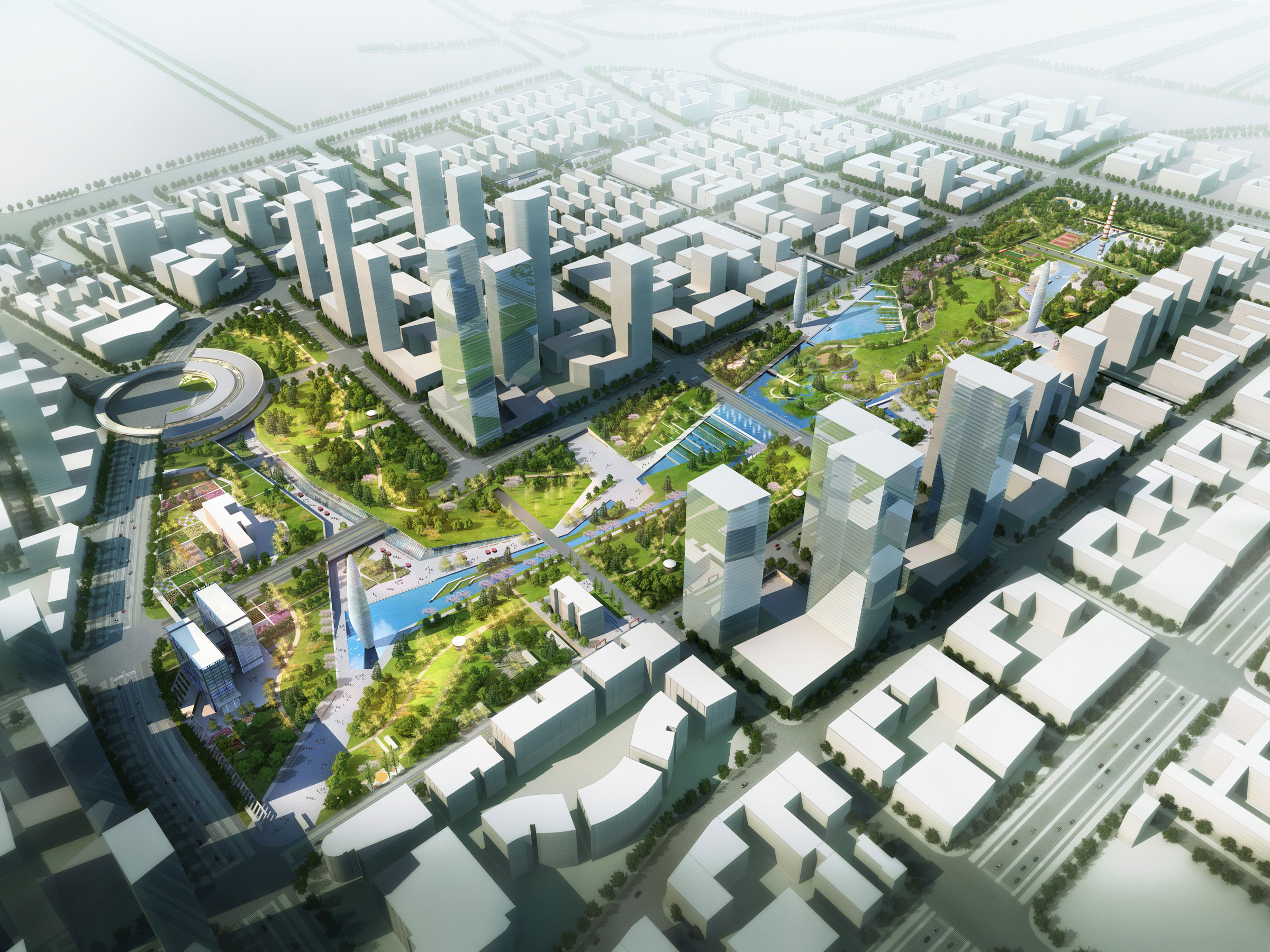
DMAA has been working for several years on a diverse range of projects in China, the first of which resulted from an enquiry by the German landscape designers Valentien & Valentien in 2015. As landscape architecture traditionally enjoys a much higher status in China than building, it was no surprise that the joint competition entry that emerged from this enquiry addressed the transformation of a derelict industrial site in the heart of Shanghai into a high-quality local recreation zone.
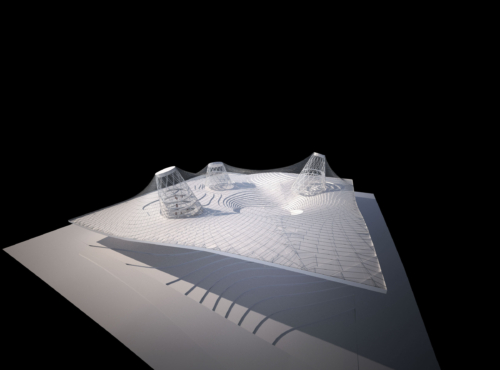
The starting point for DMAA’s project included not only a freshly vacated site, on which the ground and the groundwater were contaminated, but also air pollution levels and a municipal waste management system that required improvement. As a result, DMAA decided to design the project as an ‘exhibition park’ that would highlight the decontamination of the ground and the groundwater by showpiecing the plant-based methods for carrying out this process and developing special water towers, equipped with PV modules, that were capable of not only supplying the entire district with drinking water at times of peak demand, but also delivering the electricity required for refilling the resulting water tanks.
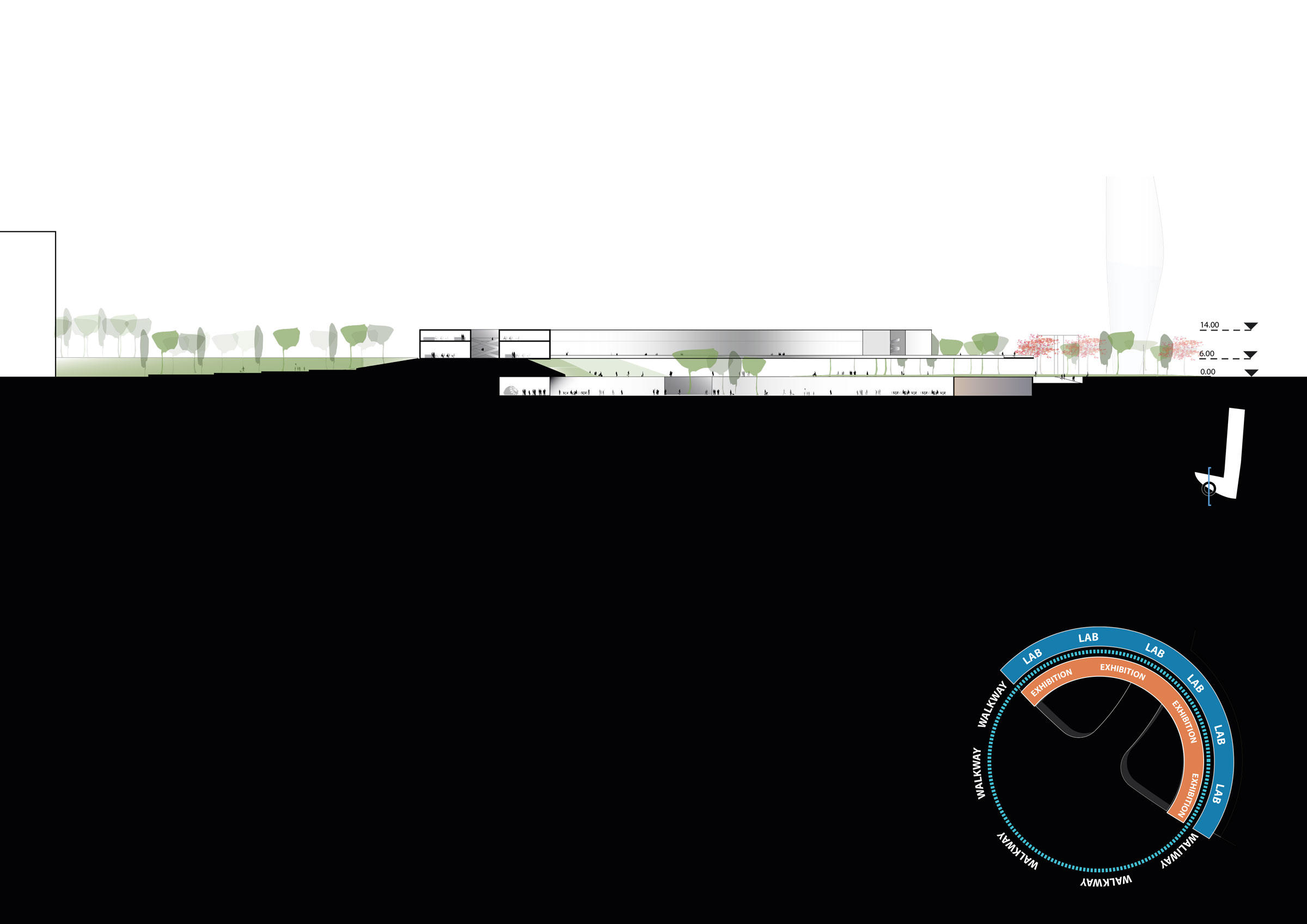
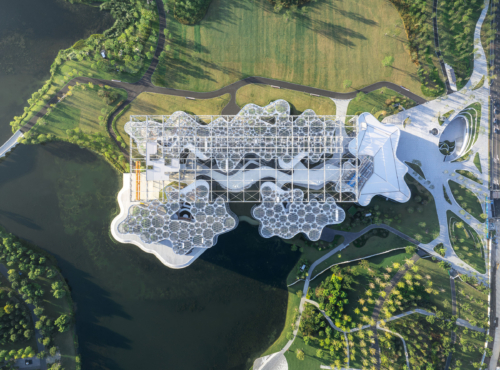
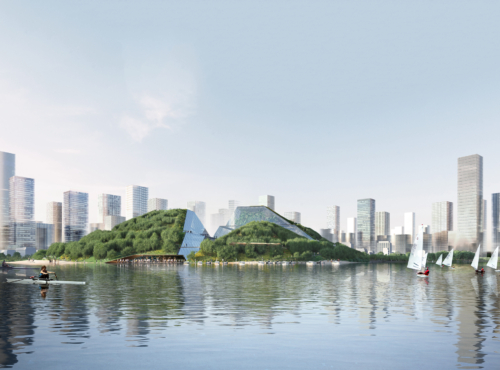
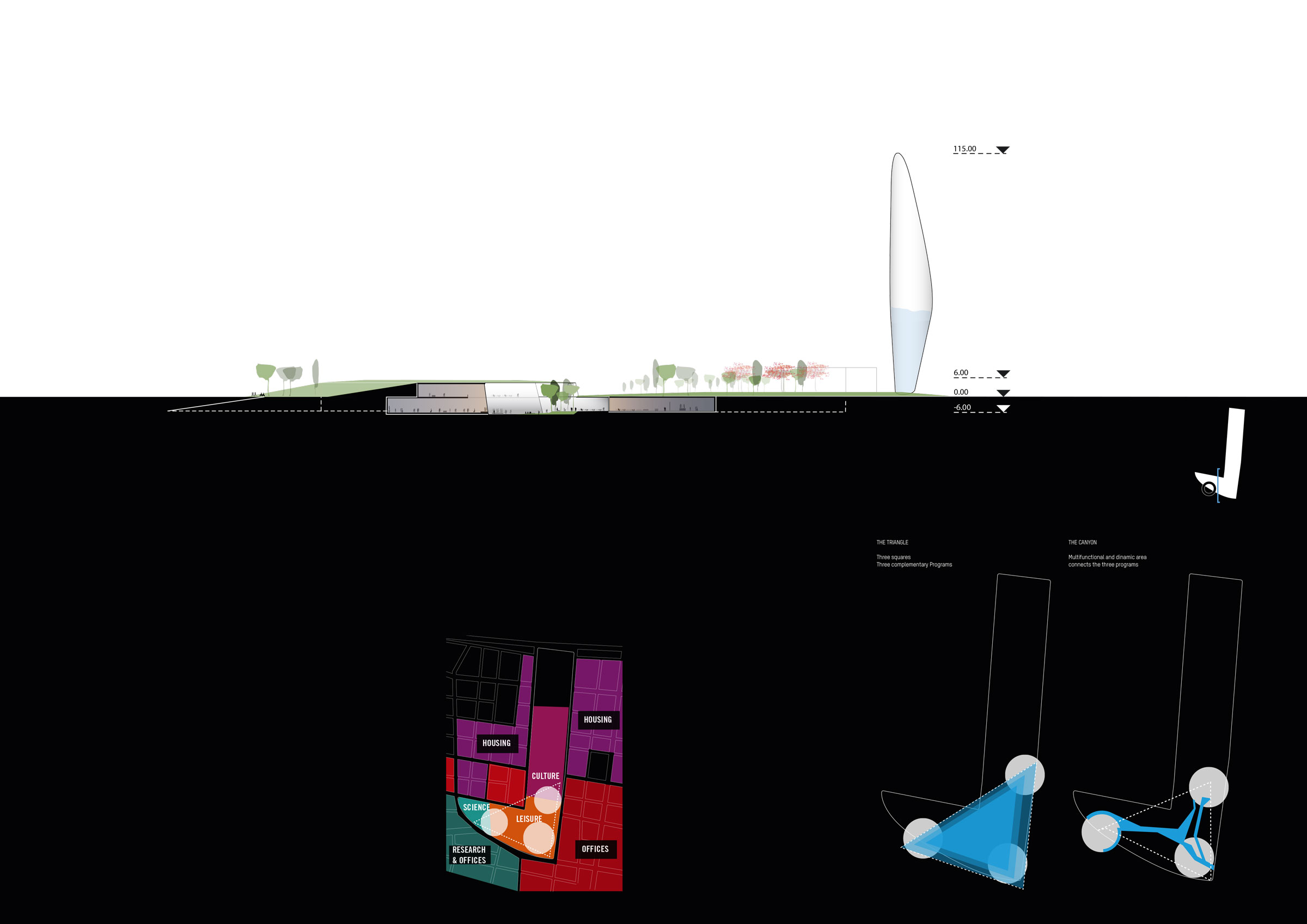
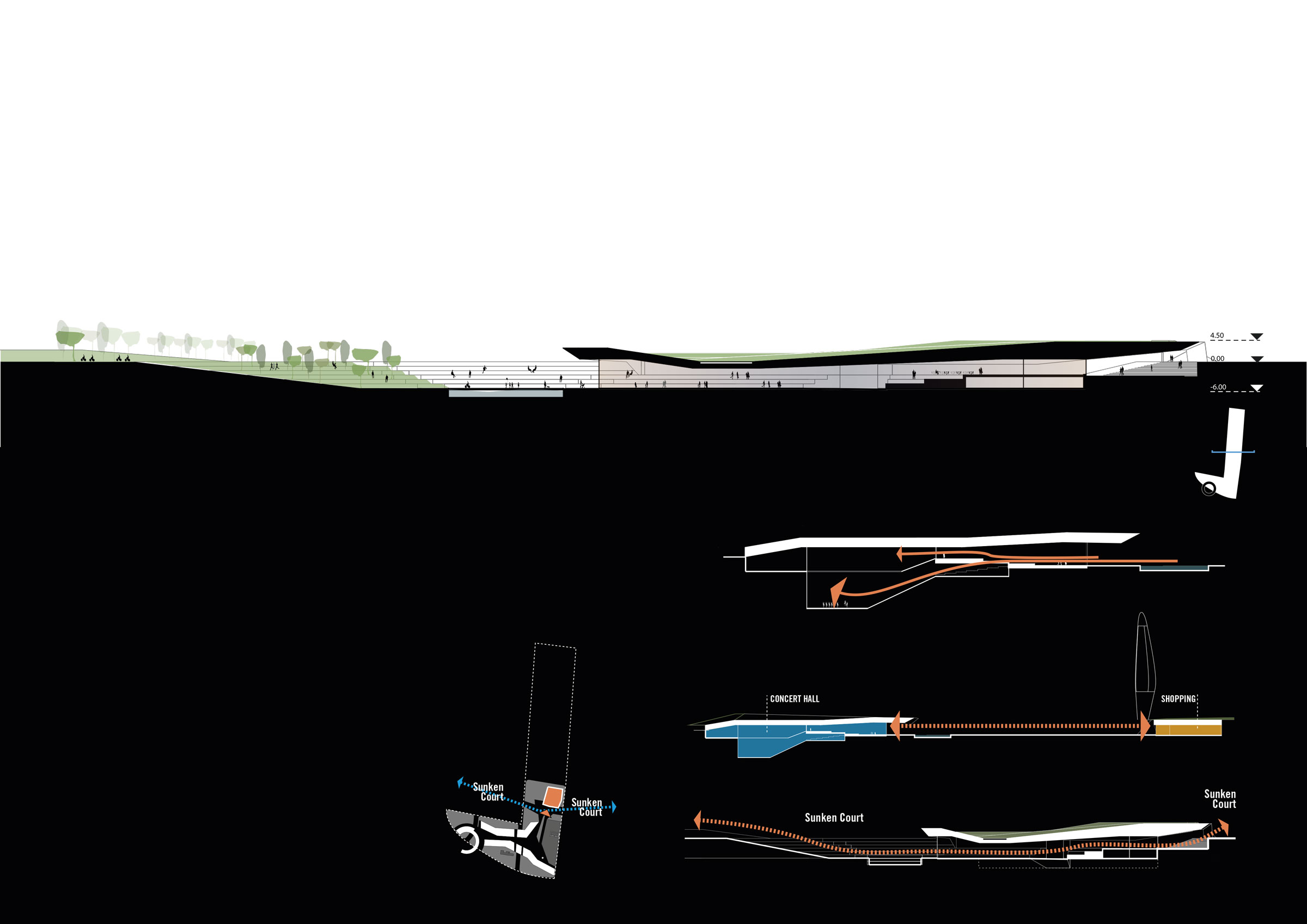
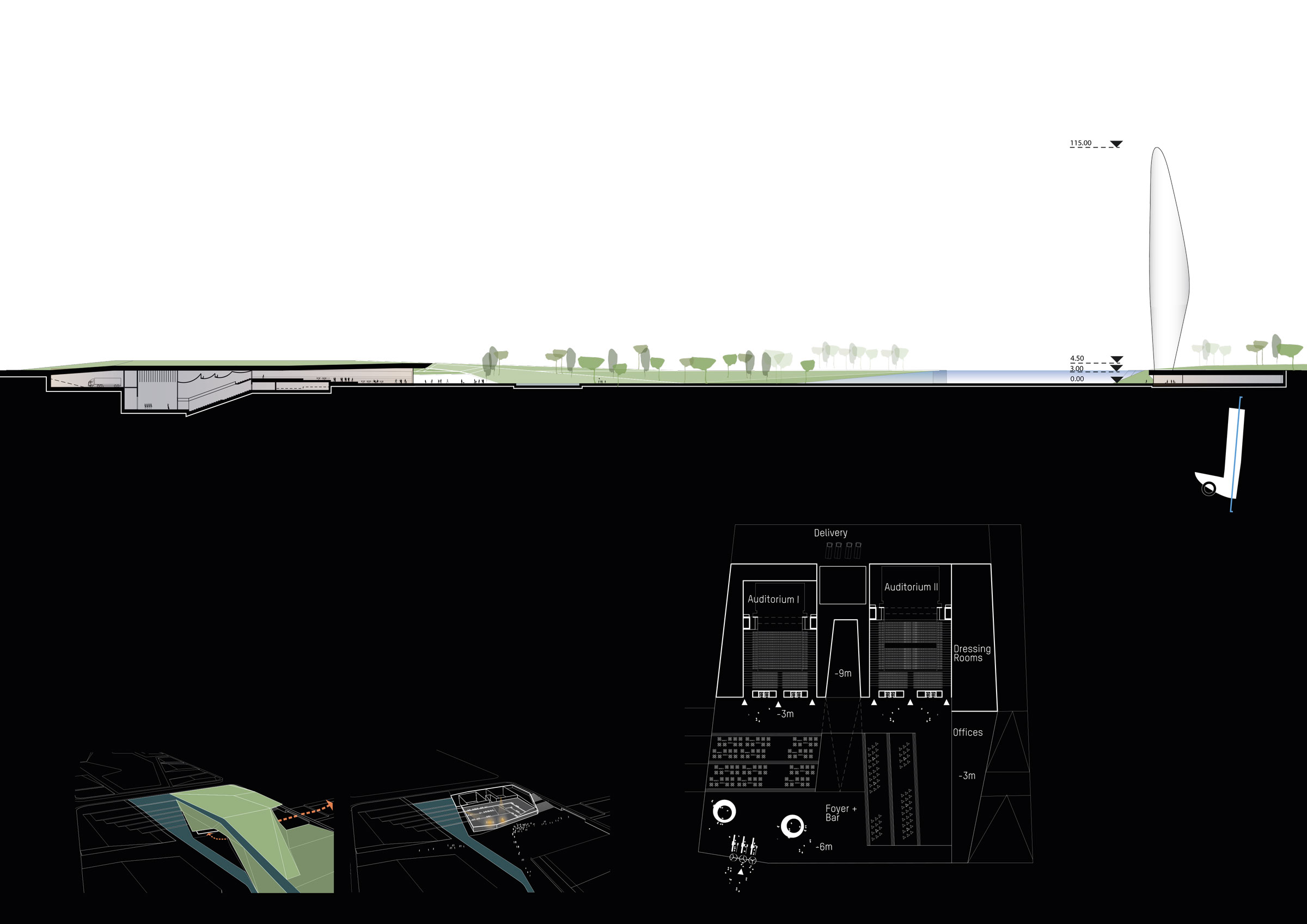
Alongside these aspects of the ecological repair of the city, the programme also proposed the creation of a science park and a concert hall, which interact with the landscape in very special ways and can be seen as models of a proactive public relations approach that seeks to engrain the importance of urban green space in the public consciousness.
The solution highlighted two aspects that apply to – and make a major contribution to the special appeal of – all of DMAA’s projects in China.
The first is the fact that the large land reserves in China’s cities that are freed up by the exodus of industrial facilities are almost always remodelled as high-quality green space in otherwise high-density central locations. In other words, an awareness that is beginning to prevail in Europe – of the importance of creating large amounts of publically accessible green space and leisure areas as a means of countering global warming – is already accepted practice in China.
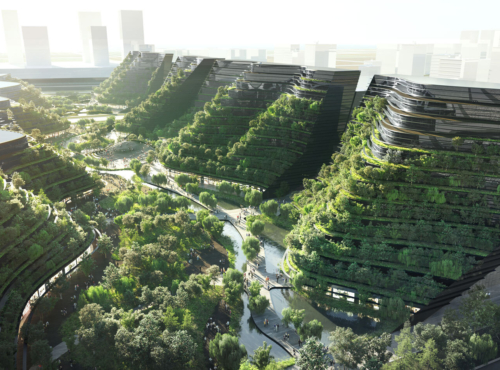
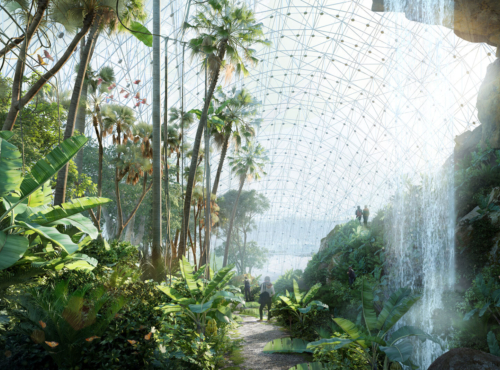
Secondly, due to these first positive project experiences, DMAA is increasingly being invited to become involved in projects which, while their scale means that comparisons with European projects can only be of limited value, invariably combine the design of high-quality public green space with the creation of additional cultural or leisure uses. Alongside general recreational qualities, great emphasis is also placed on cultural and spiritual aspects and on the realisation of a built infrastructure that is rooted in nature and seeks to make this nature, in all its many forms, tangible for the mass of the population.
Address
Putuo District
Shanghai, China
Competition
2015 (1st prize ex aequo)
CONSULTANTS
Valentien + Valentien
Landschaftsarchitekten und Stadtplaner SRL
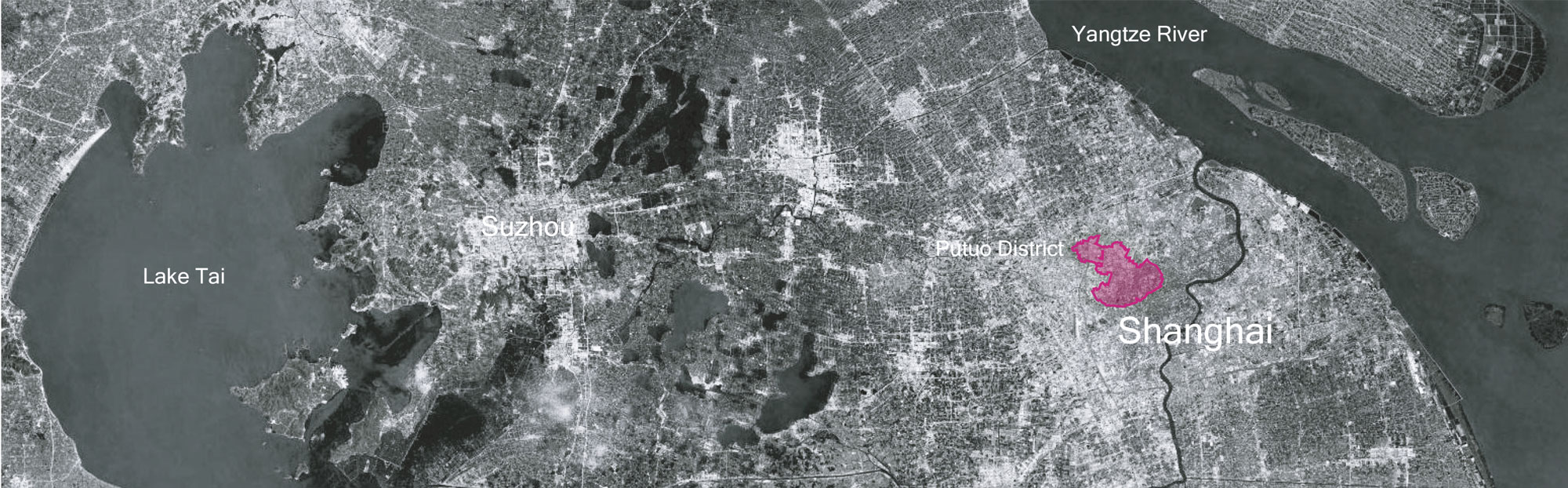
The Putuo District is located northeast of the central area of Shanghai, China. It covers a area of 54.83 km2.
The Shanghai West Train Station is in Putuo District, which explains it’s good connections by public or private transportation to the city center and important hubs like the airports.
It contains many industrial buildings
(former factories, medical factories, brewery, chemical factories and many more) and several cultural buildings like the Yufo Temple, Zhenru Temple and museums.
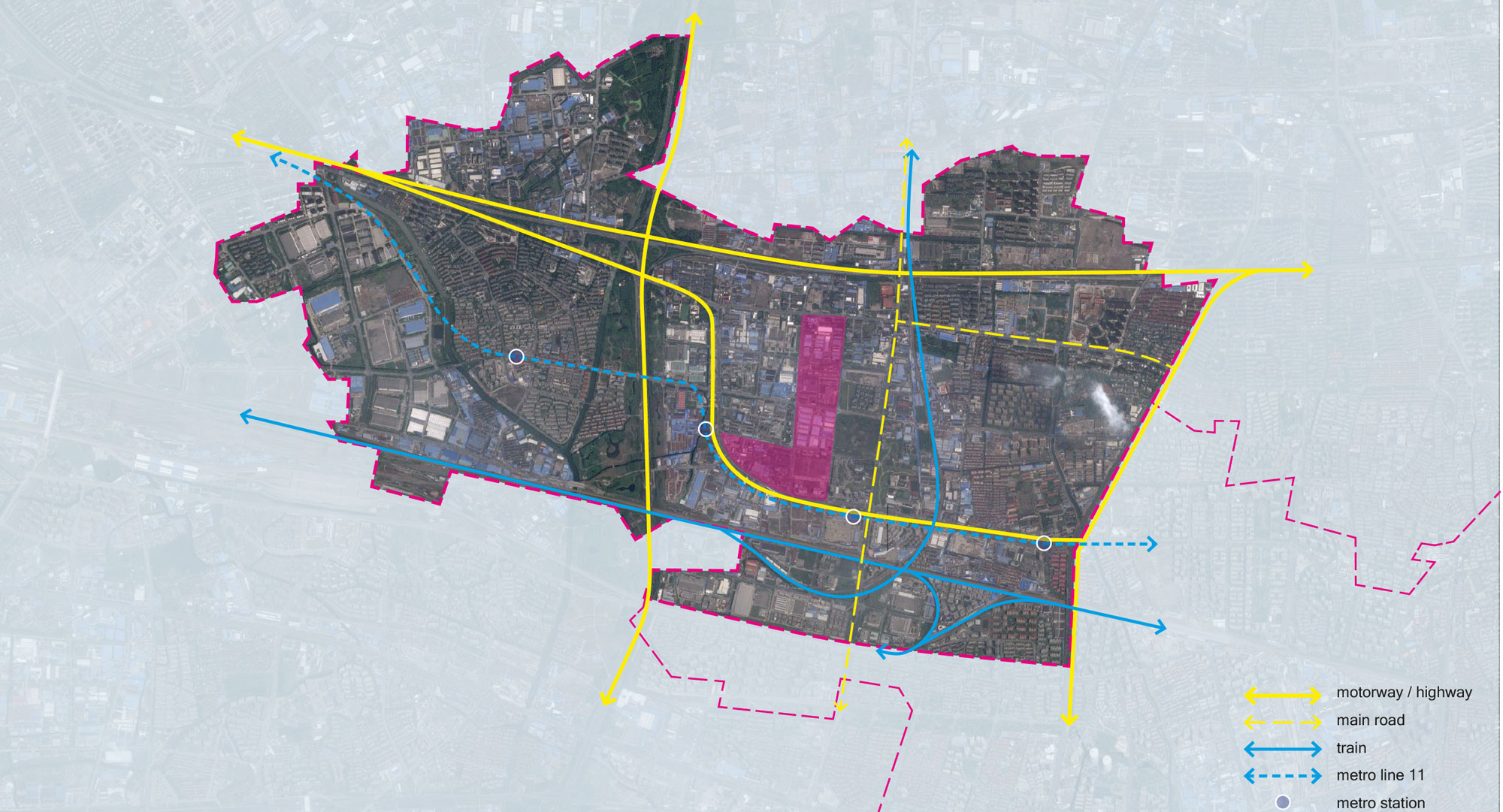
Site analysis
Soil Contamination
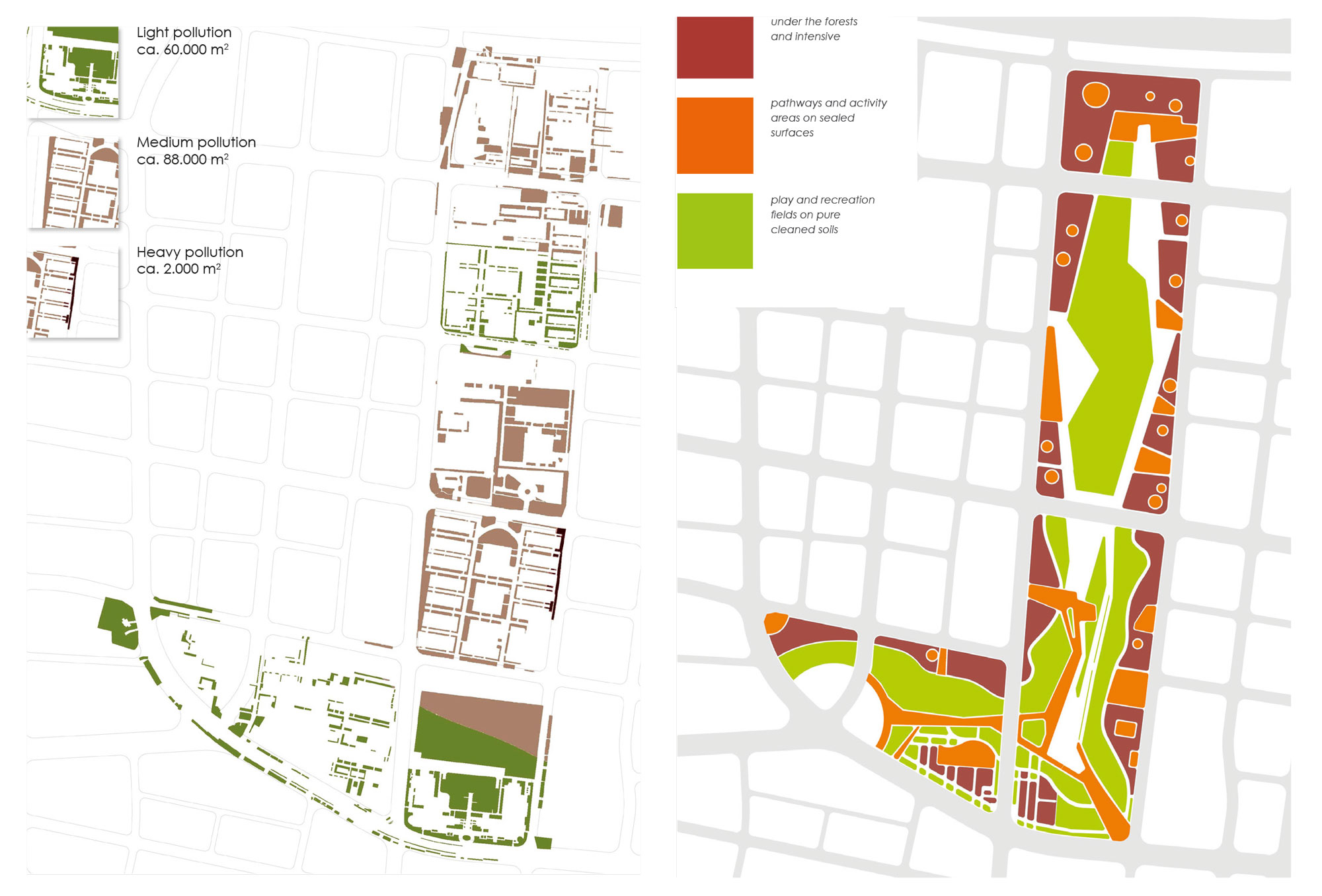
The aim is to clean and reuse as much soil as possible on the site.
Plants play an extremely important role in this process. Different types of vegetation can accumulate chemicals from the soil over a longer period of time.
Therefore, vegetation can be strategically planned in order to absorb the soil’s impurity and helping to reach a healthy and sustainable environment.
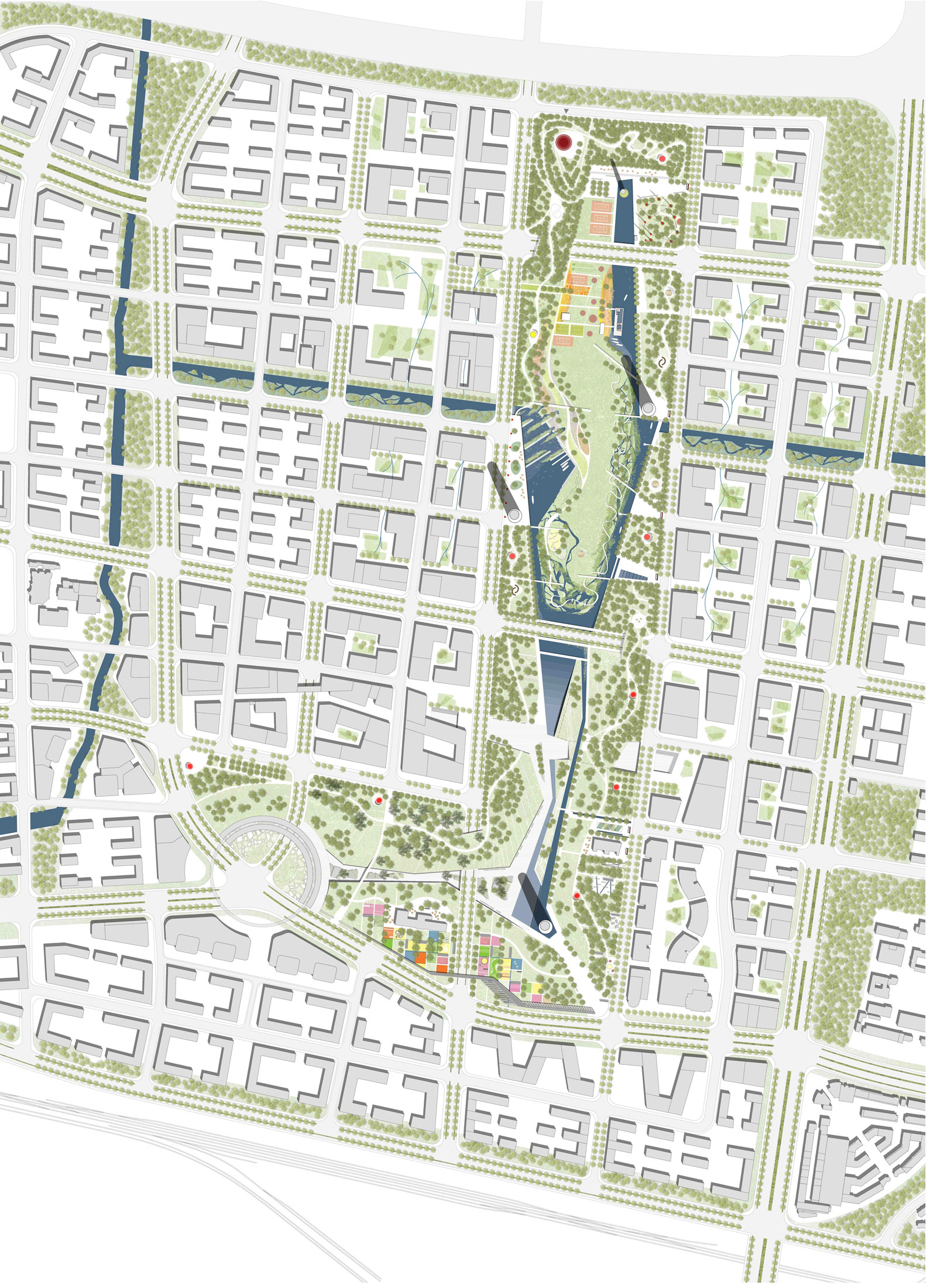
Central Park Taopu
As part of the urban expansion and
development of the Taopu Science and
Technology City Center, the landscape and
the open spaces are to be won back and
an attractive local recreational area made
available to the residents of the district. At
the same time, the idea is to be tested and
demonstrated as an example of how an
integrated, sustainable urban development
could be in the future.
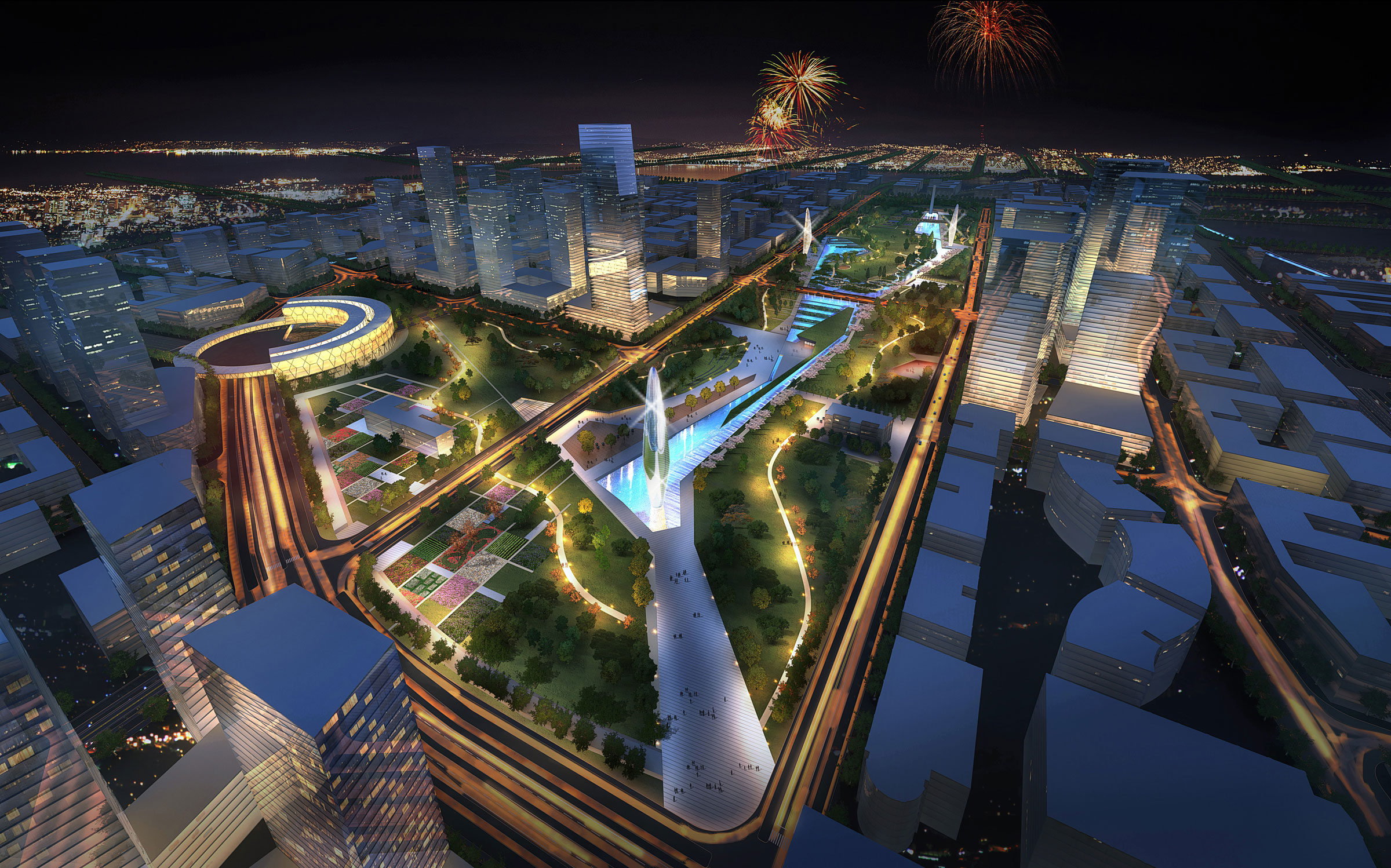
The park is characterized by ecological and
technological goals of energy production,
soil purification, and water recycling. The
technical facilities, the water towers, the solar fields, and the biogas plant, will certainly be integrated into the park. The residents should be able to be read about the sustainable urban and landscape development, and it should be clearly demonstrated in the park.
Thus, one experiences very diverse worlds
by taking a walk through the park. One
is refreshed by modern technology and
romantic flower fields, waterfalls and quiet
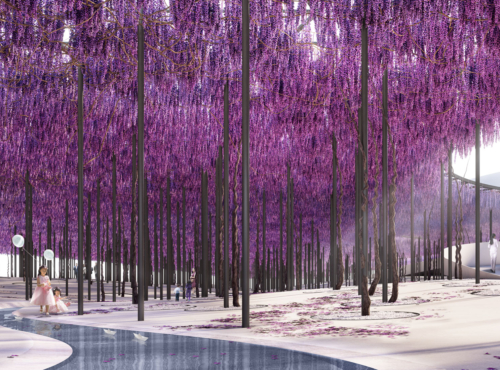
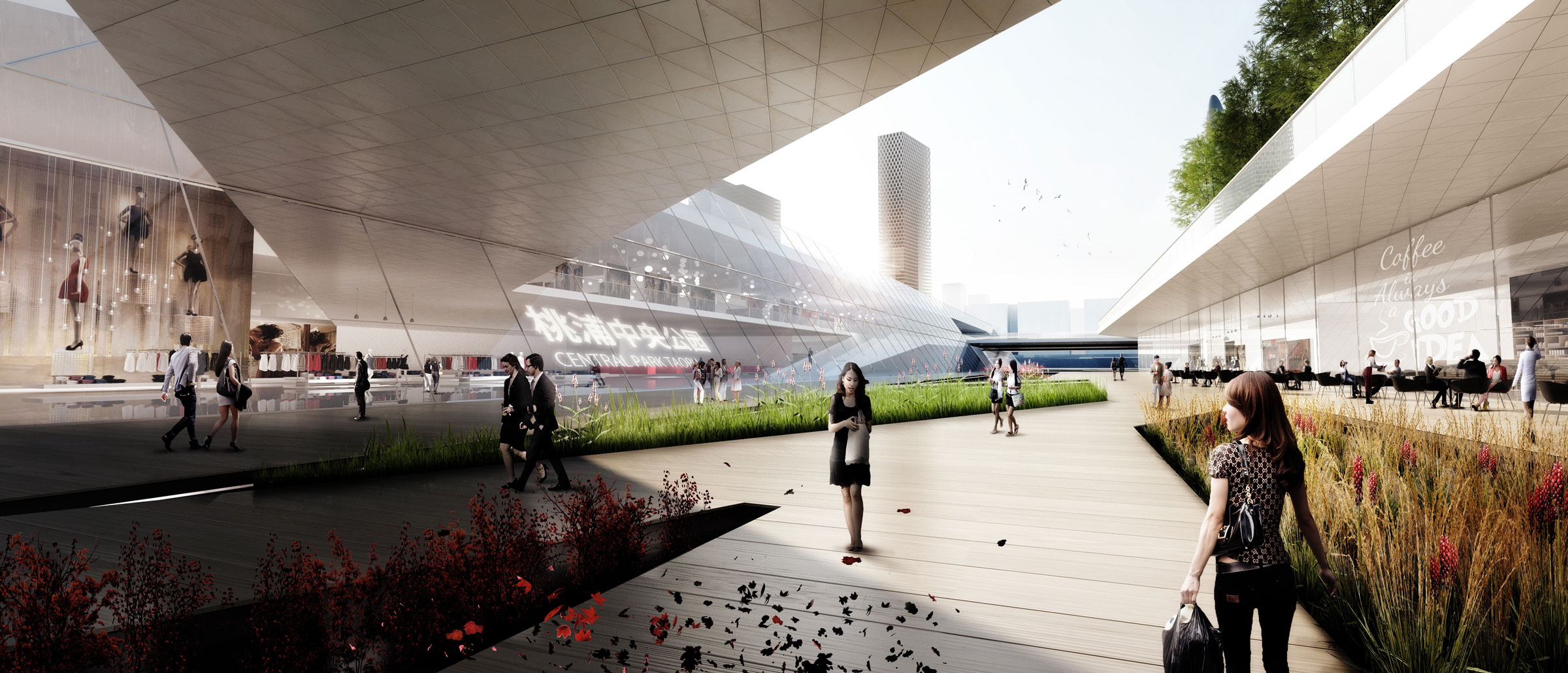
ponds, cultural offerings and commerce, and a vibrant restaurant scene and small hidden tea houses. This park reinvents the nature of the city.
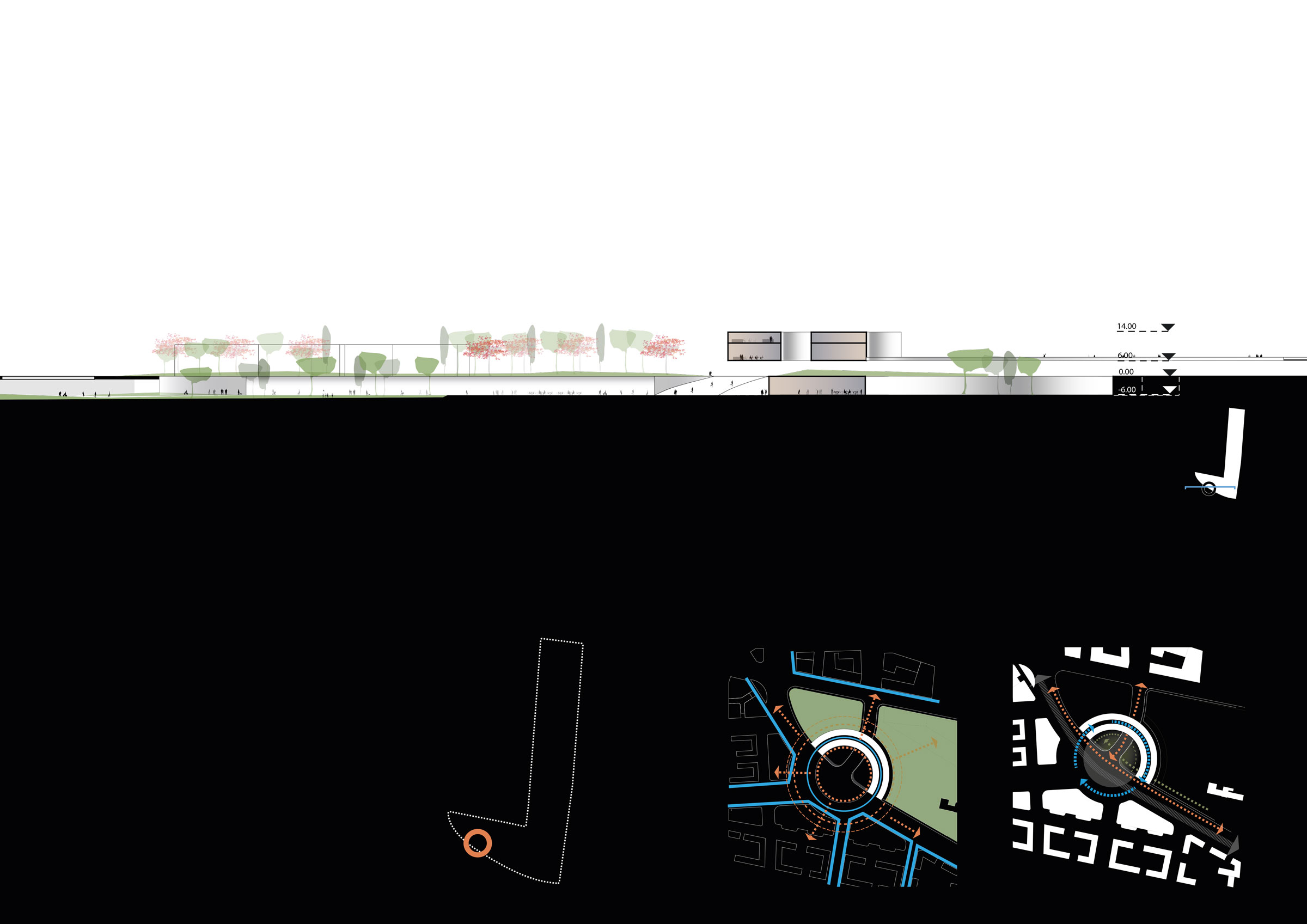
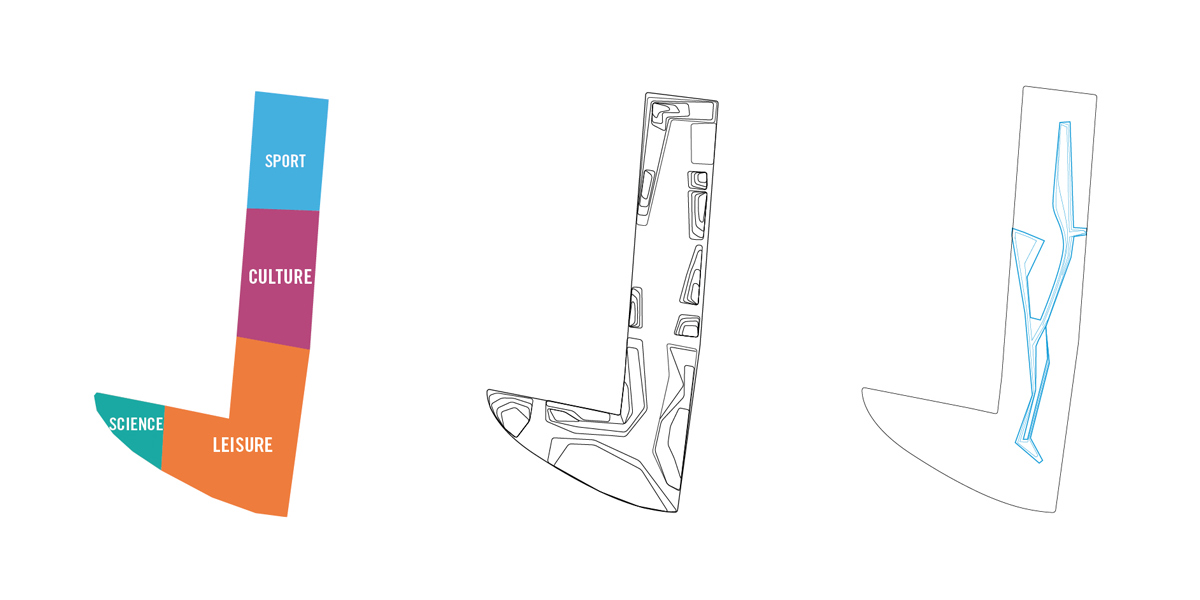
1. functional subdivision of the site
2. landscape reaction to the city infrastructure and environment
3. water topography flowing through the interior of the park
Water Towers
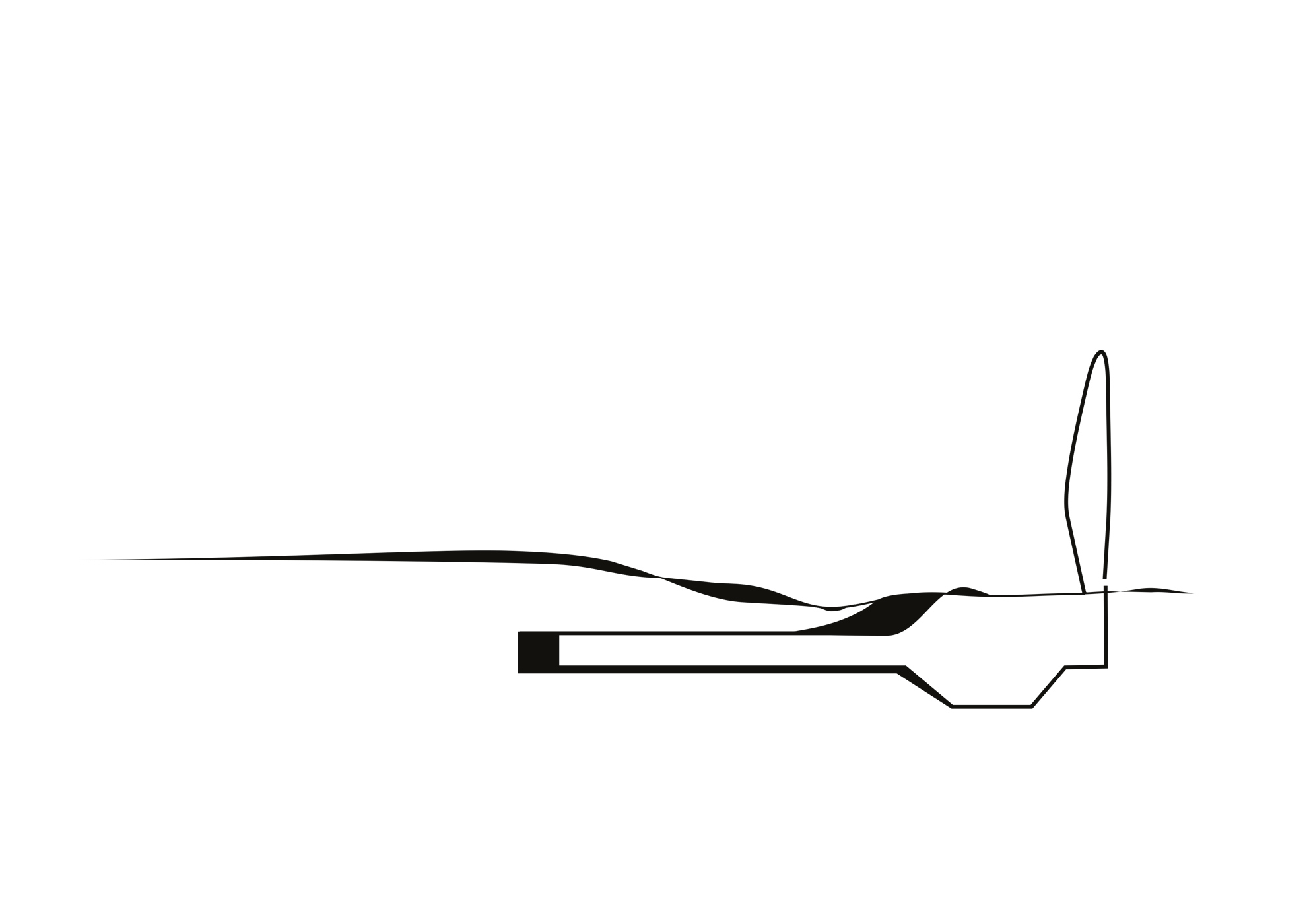
Elevated structures supporting a water tank constructed at a height to pressurize a water supply system for the distribution of potable water have been used since ancient times.
Because only the hydrostatic pressure of the elevated water is used, they are able to supply water even during power outages. A water tower also serves as a reservoir to help with water needs during peak usage times. The water level in the tower falls during the peak usage hours of the day and a pump is used to refill at night. A variety of materials are used to construct water towers, including steel and reinforced concrete.
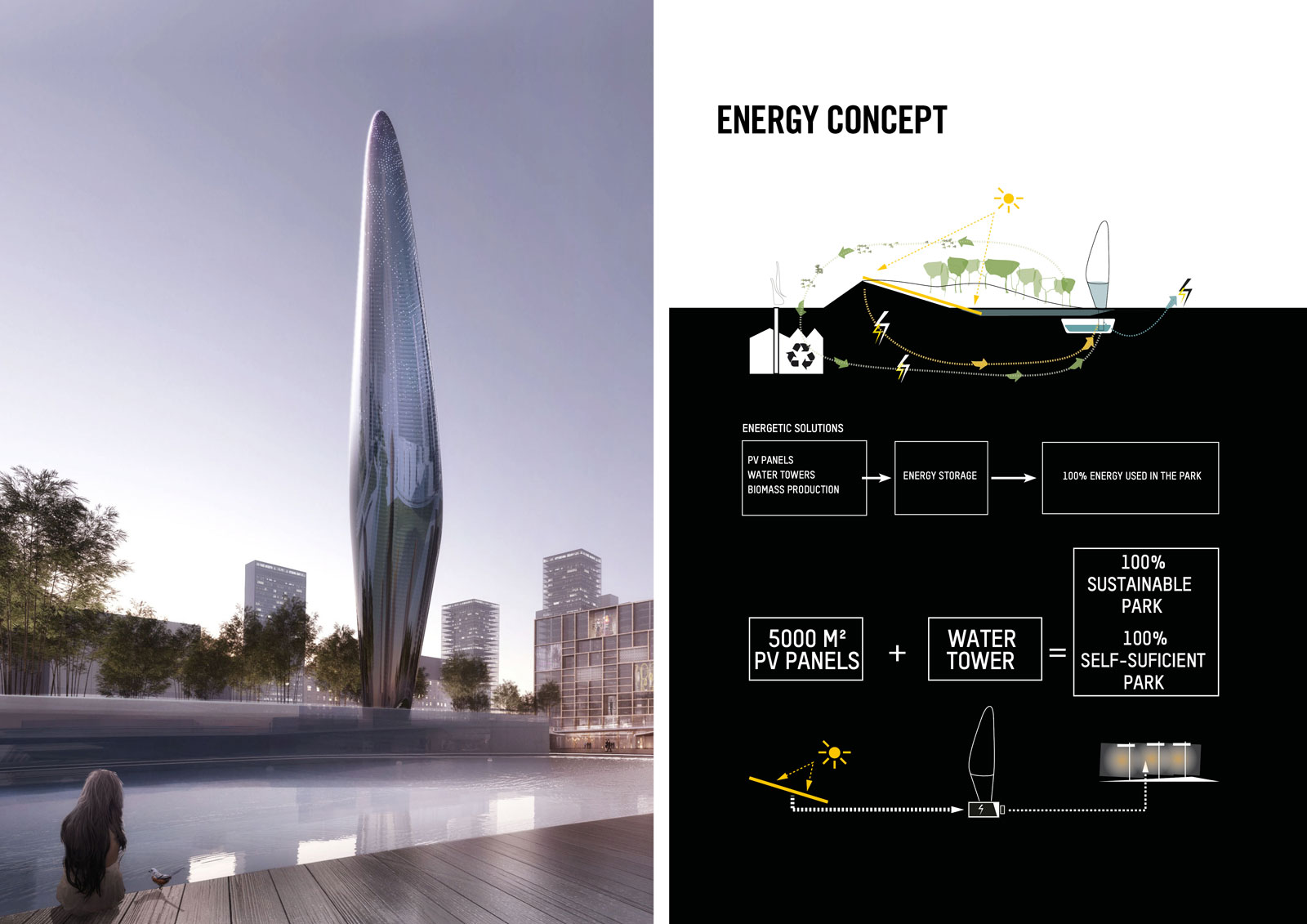
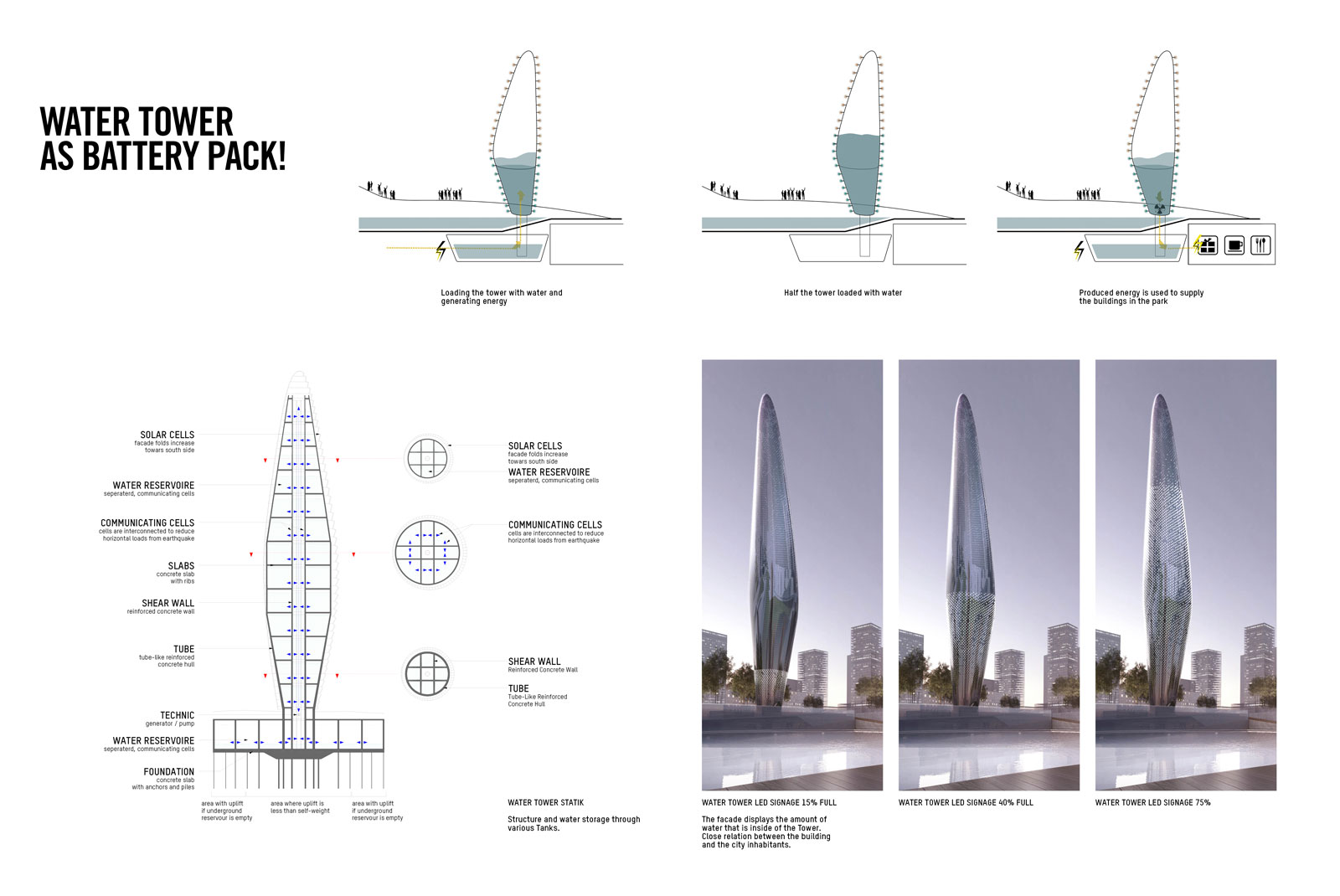
Taopu Park is being created in a former industrial area. Reclaiming it means breaking up large amounts of building materials from the buildings and streets. As a rule, such materials are hauled away and disposed of or used elsewhere. That means high energy needs and a high volume of traffic.
The energy balance of the future park is also being put to test. An inner-city park needs water and energy for its maintenance, and it produces waste materials, such as large amounts of green biomass that are normally disposed without being used. In Taopu Park, the green biomass, which accumulates in the park, is not hauled away, but is changed into valuable gas in the biogas plant. For example, this energy can be used to independently supply the restaurants and the fitness center.
Moreover, areas with lower maintenance are purposely chosen; this not only saves energy, but expenses as well. Some scenes will be created that are different than in traditional parks, but they will be no less beautiful. The rain water that is collected and the purified water from the canal supply the park and its vegetation: no valuable drinking water is wasted for irrigation in this park. The water towers and the solar cells contribute to independently covering the energy needs of the buildings.
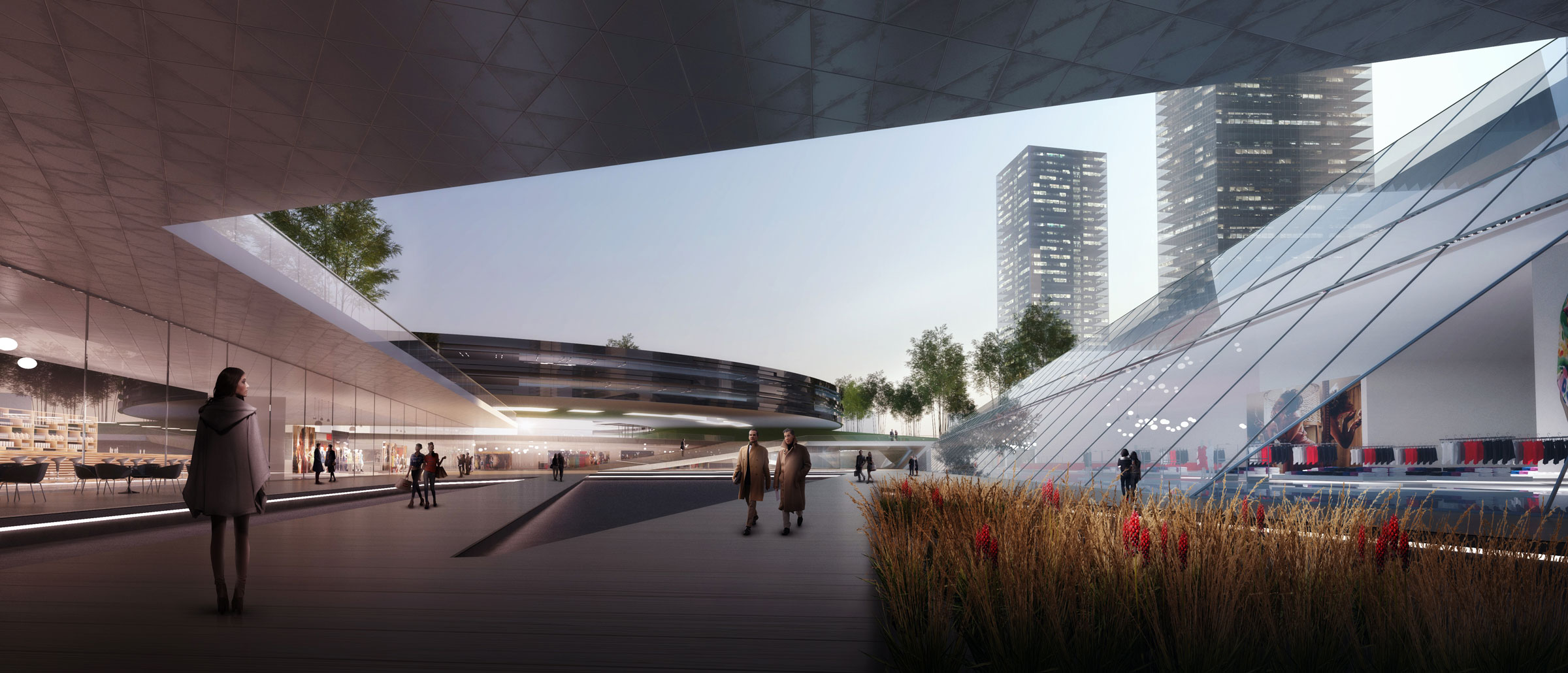
Shopping Mall
The Canyon
Concert Hall
Science Center